Understanding Post Resetting: What Homeowners Need to Know
How Fence Posts Usually Fail
In a typical residential Colorbond fence, posts fail because they are not embedded deeply enough or because the concrete footing is undersized or poorly finished. When wind loads act on large sheeted panels, the force transfers directly into the post. If the concrete pier can shift in the soil, the post will move. Over time, that movement becomes visible as lean, play, or full failure.
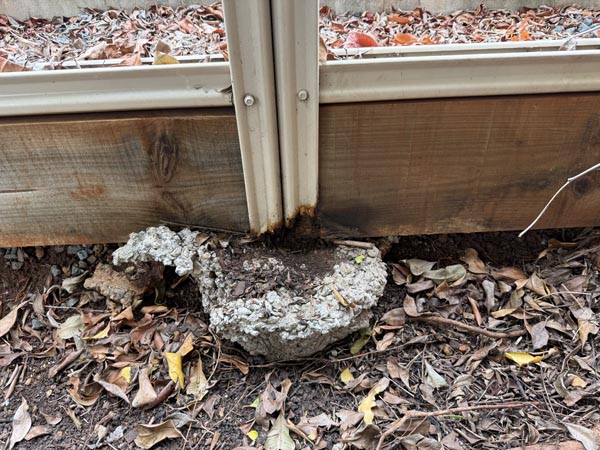
As a rule of thumb, where both sides of the fence are at the same level, a post should sit in a hole around 200 mm in diameter and 600 mm deep. The image below shows a post that was leaning, was able to be excavated with the concrete pier intact, showing that it was undersized at 450mm deep. This was able to be jackhammered off, and concreted back in the ground at an adequate depth.
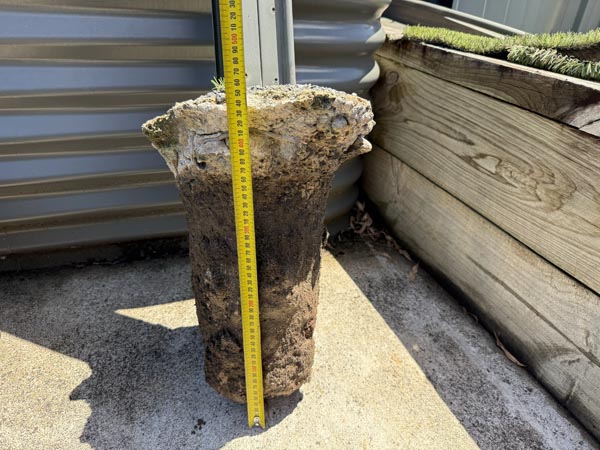
Anything less than 500-600mm is relying on luck. Shallow holes usually point to rushed work, poor planning, or hitting an obstruction and compromising rather than addressing it properly.
Those shortcuts often don’t show up immediately. They surface years later.
Why This Job Was Different
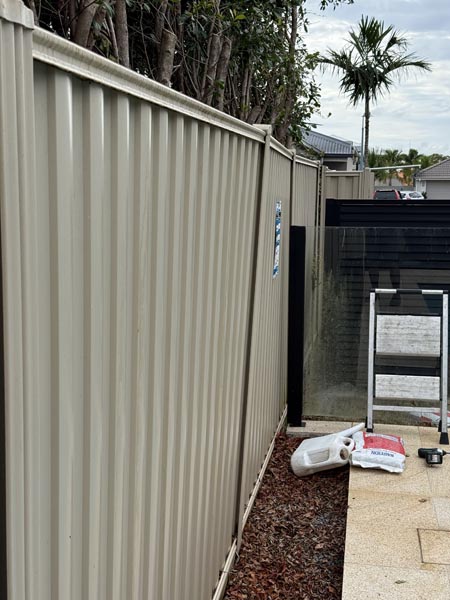
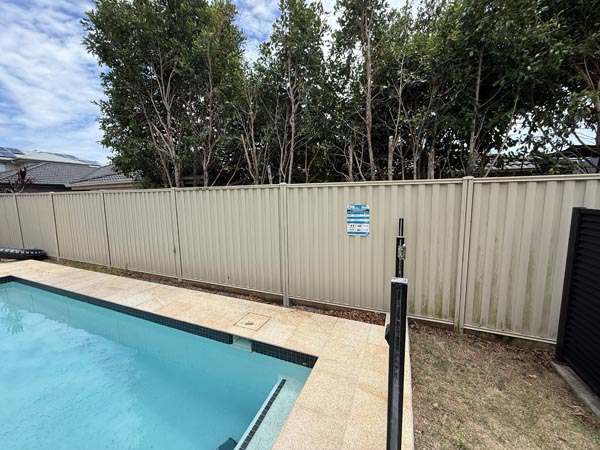
We had a recent spat of heavy winds and I became inundated with enquiries – one of which was just around the corner from me. The scope at this property was to reset a single loose post on an 1800 mm high Colorbond fence, Wavelok profile, in Domain colour (which Stratco calls Primrose). During inspection, it was clear that other posts along the fence line showed some movement, though not yet full failure.
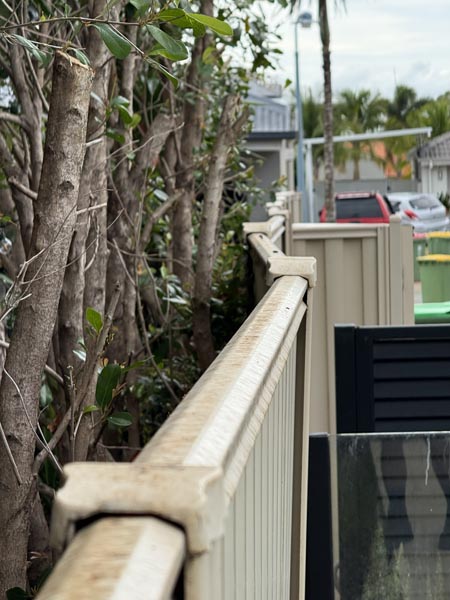
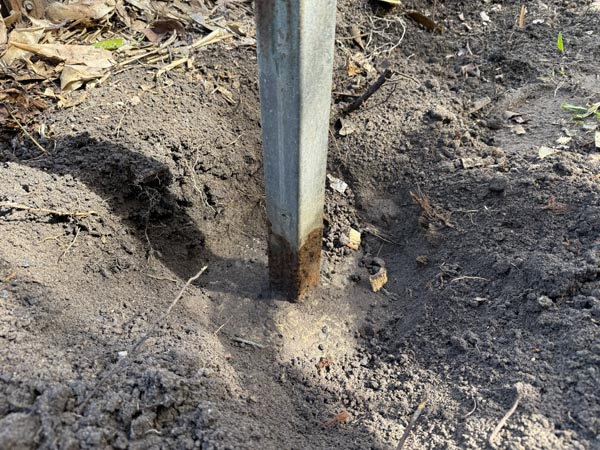
Once the panels either side were dismantled and the concrete pier fully excavated, it became obvious that the footing itself had not failed. The post had corroded at its base and snapped. Wind load finished the job.
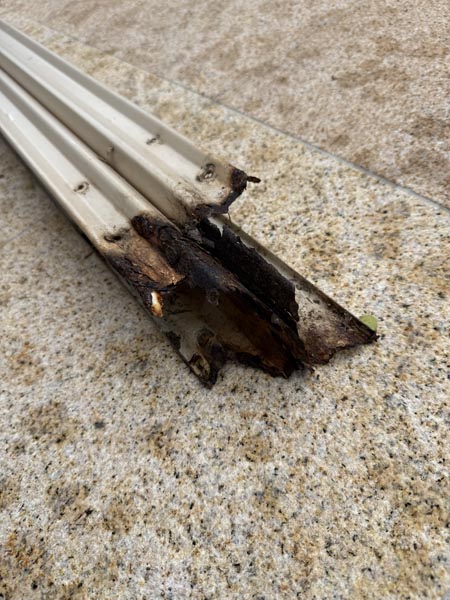
This only became clear once access to the neighbour’s side was available. Peering over the top rail from above, it looked like a typical loose post. In reality, the post itself had already failed structurally.
Communication When the Plan Changes
As soon as the cause was confirmed, I contacted the homeowner and explained what had been found and what that meant. The original plan to reuse the post was no longer viable.
Replacement posts in the same colour were confirmed in stock at Stratco, avoiding delays or special orders. It was agreed to proceed with the additional cost, and the replacement posts were collected immediately. The cost variation was limited to the cost of the new post: ~$60.
This is where communication matters. A change in scope is bad news only if it comes as a surprise. Clear explanation turns it into an informed decision.
What Post Resetting Actually Involves
Resetting a post properly is not a cosmetic fix. It requires dismantling, excavation, alignment, and reinstatement.
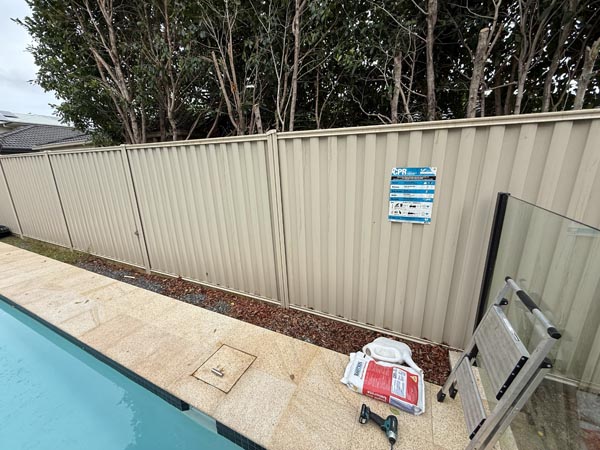
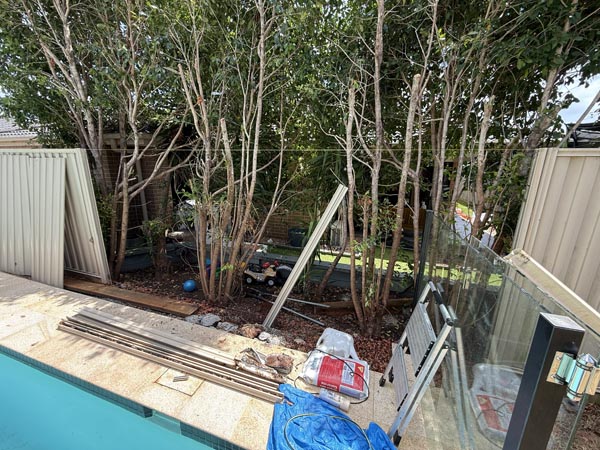
On this job:
- Panels either side were removed to allow full access
- The failed post and concrete pier were completely excavated
- The original treated pine sleepers were put back in place to allow clean repositioning
- Top and bottom string lines were set to return the post to the existing fence line
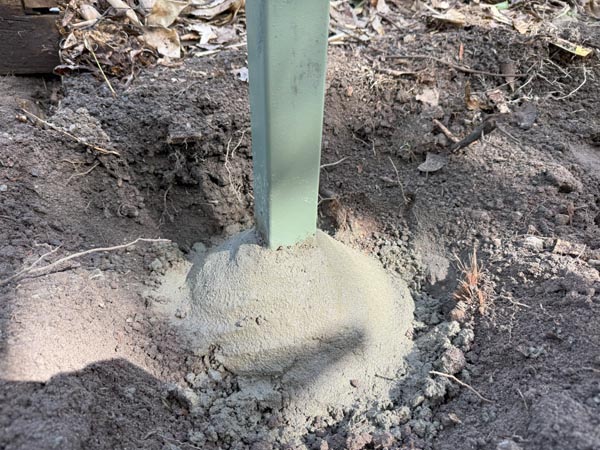
- The post was set plumb and concreted with two and a half bags of concrete to allow for the larger sized hole.
The concrete finish matters. The top was wet-mixed and domed, allowing water to shed away from the post base rather than sit against it (likely why the previous posts corroded out). Flat finishes trap moisture. Domed finishes reduce it. That detail alone can add years to a post’s life.
Bonus: a cool YouTube tip I learned for minor wet mix needs – Rapid Set concrete generally has instructions on it’s bag for both dry pour and wet mix pouring. Dry pouring is fine when done correctly, but is unable to be malleable enough to mold with your hands.
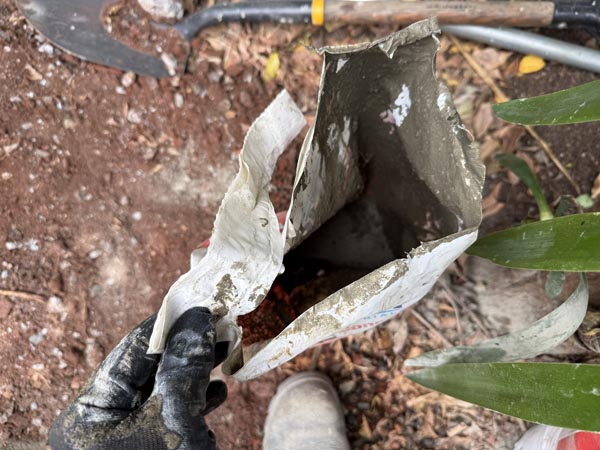
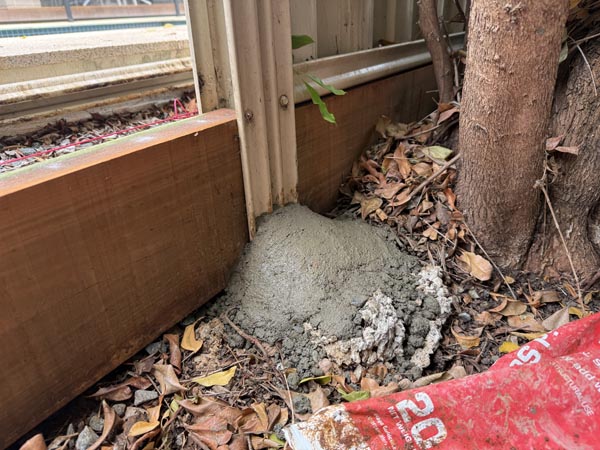
A good wet mix has the consistency of toothpaste. Taking an already empty/used 20kg bag – one of the plastic waterproof ones like Bastion does – Adding a bit of water then the concrete, and squeezing it around from outside the bag with your hands, gets a great little mix going which you can apply to small areas.
From start to finish, this whole repair took three hours. More than one hour of that time was spent purely on excavation, using hand tools and a jackhammer.
Spotting the Next Failure Early
The post immediately adjacent to the failed one showed advanced corrosion at its base. It had not snapped yet, but it was on the same trajectory. The concrete footing had been finished flat, promoting water retention and preventing the base of the post from drying out.
That post was treated with corrosion-inhibiting paint, and additional concrete was added to form a domed finish. This won’t prevent failure indefinitely, but it will slow it down and buy time.
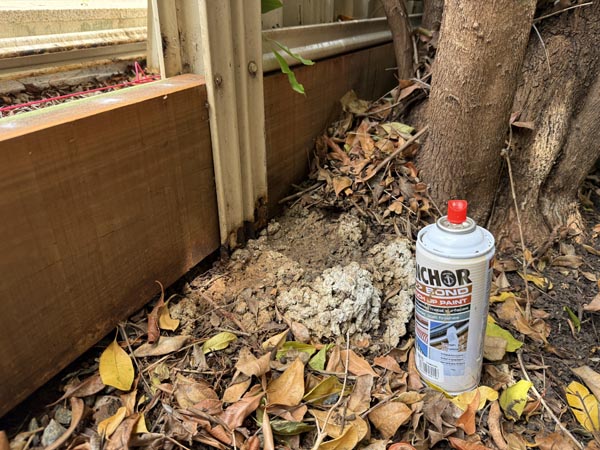
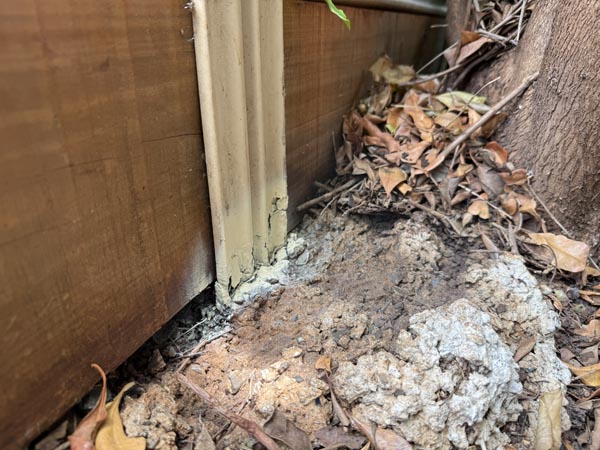
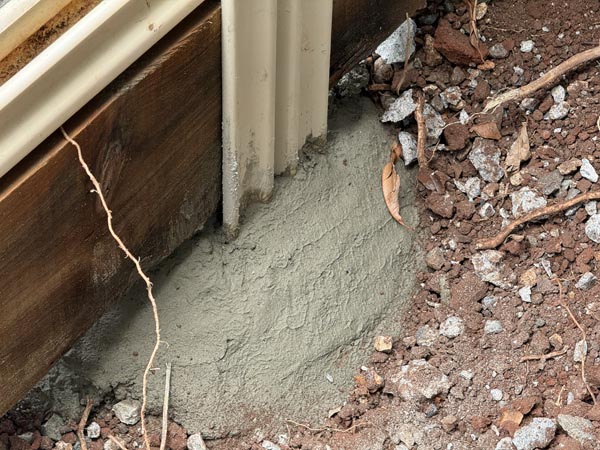
Identifying these issues early allows homeowners to plan rather than react.
Installation Choices That Catch Up Later
Further along the fence line, at least two more posts exhibited movement. The likely causes date back to the original installation, roughly ten years ago.
Two issues stood out:
- Post length: The removed post was a standard 2.4 m length. With a sleeper at the base and a required 600 mm embedment, 2.6 m posts should have been used.
- Concrete finishing: Flat footings retain moisture and accelerate corrosion at the most vulnerable point of the post.
Had these details been addressed at install, the fence would reasonably have had another decade of service before issues emerged.
Housekeeping and Why It Matters
This job also highlighted a maintenance issue that is easy to overlook.
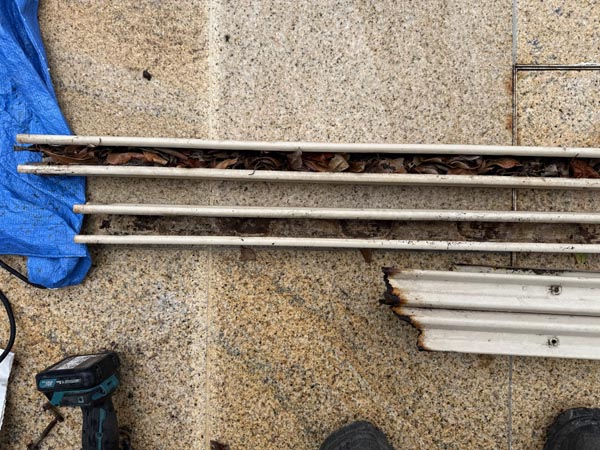
Leaf litter had accumulated inside the bottom rail. Once removed, you could clearly see early corrosion staining and scuffing where panels had moved in the wind. That movement scrapes the factory coating off the steel, exposing bare metal.
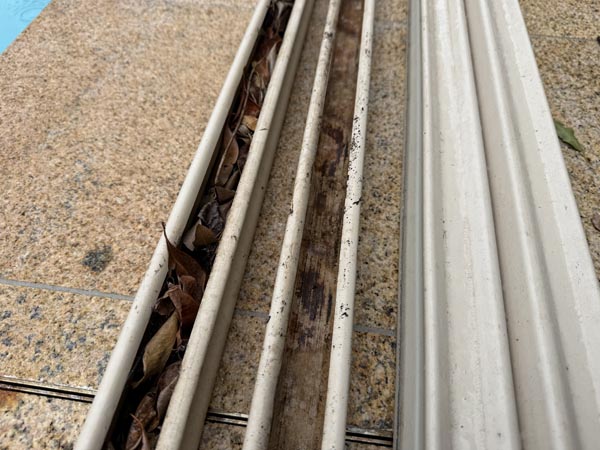
If leaf litter and debris are left to build up, over a number of seasons they mulch. The mulch retains moisture against those exposed areas. That is where corrosion starts.
Simple housekeeping makes a difference. Blowing out bottom rails every few months keeps leaf litter from turning into mulch and significantly prevents deterioration.
Safety Changes the Decision-Making
In some situations, selective post resetting is not the right long-term answer. If multiple posts are already compromised, full replacement is often the better recommendation than a band aid fix throwing good money after bad.
This property was different. The fence formed part of a pool barrier, and the neighbouring property has young children and animals. Addressing the immediate safety risk quickly was the priority, while clearly flagging foreseeable future issues – Fix what must be fixed now. Plan properly for what comes next.
Post resetting isn’t just about making a fence stand up straight again. It’s about understanding why it failed, what else may be coming, and how small details in installation and maintenance affect lifespan.
Providing that context allows homeowners to plan, budget, and avoid being caught off guard. Even when the message isn’t ideal, clarity beats uncertainty every time.