Sleepers in Fencing: Timber vs Concrete and Why It Matters
What Sleepers Actually Do in a Fence
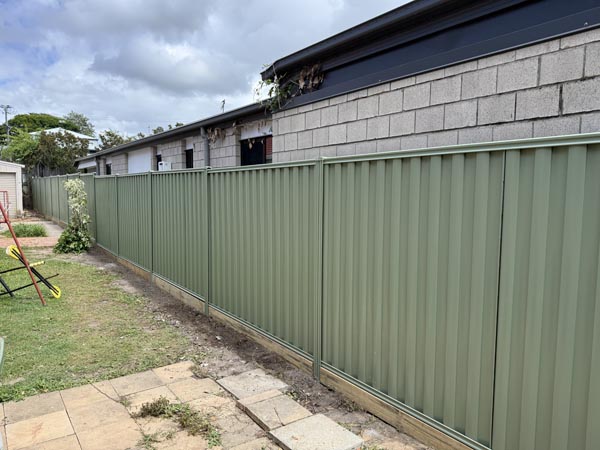
Sleepers sit along the base of a fence line. Their purpose is simple—close the gap between the bottom rail and the ground, keep soil or mulch from washing through, and create a neat boundary finish. In residential Colorbond-style fences, the sleeper is not structural. It doesn’t hold soil back. It just finishes the fence properly.
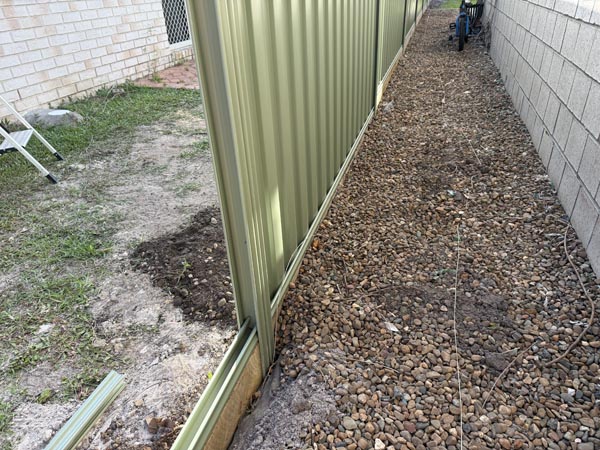
Many people assume that a concrete sleeper will “last longer” or “be better” than timber. That’s a misconception. In standard fencing, the difference between timber and concrete is not strength, it’s compatibility.
Why Concrete Sleepers Don’t Fit Standard Colorbond Posts
Concrete sleepers are designed for retaining walls. They are meant to slot between H-shaped steel posts that are 75–100 mm wide and engineered to hold back compacted fill or soil.
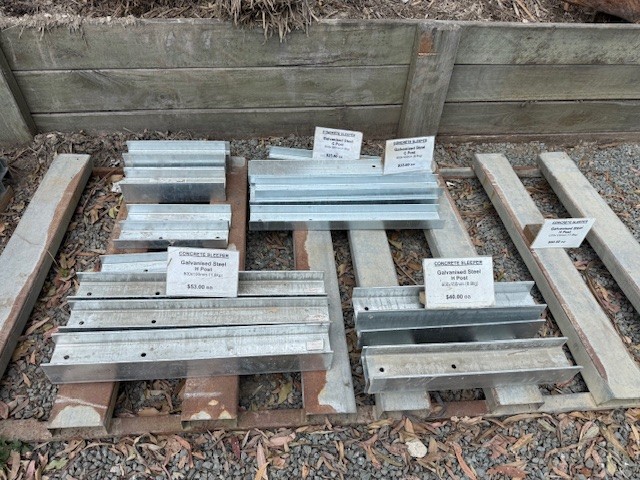
Colorbond fences use C-shaped posts about 50 mm wide. These are made to receive infill sheets and rails, not to bear lateral earth pressure. A standard 75 mm concrete sleeper physically will not fit inside a Colorbond post channel.

Some homeowners see retaining walls around their suburb and assume the same look can be achieved on a fence line. It can’t—at least not safely or cleanly. Mixing systems (for example, trying to jam a 75 mm concrete sleeper into a 50 mm post) risks structural movement and premature corrosion at the base of the post.
It is possible to use a concrete sleeper inside a Colorbond post channel, if the installer is willing to cut and trim every single sleeper end. This represents significant additional labour and handling. Additionally, neighbours must decided between themselves who gets the plain face (that’s supposed to retain soil and remain unseen), and who gets the decorative face.
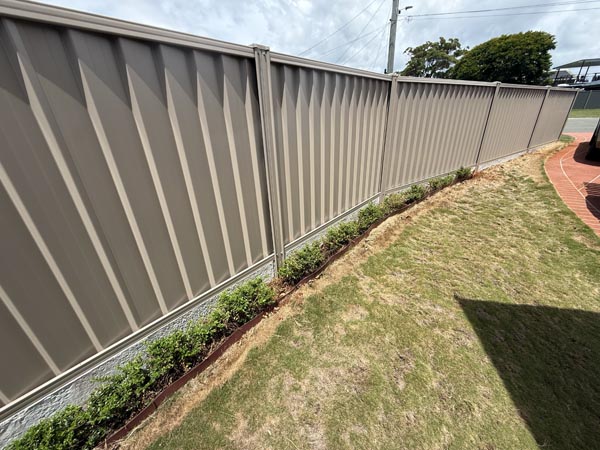
Above: Concrete sleepers custom cut to sit inside an Oxworks upright post U-Channel
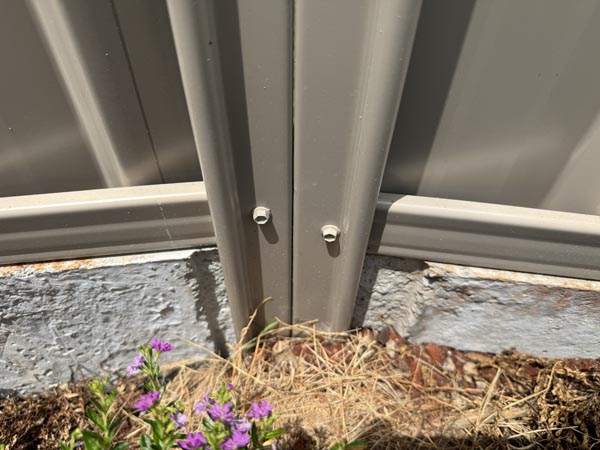
75mm wide Concrete sleepers subject to trimming so that they can fit inside 65mm post channels
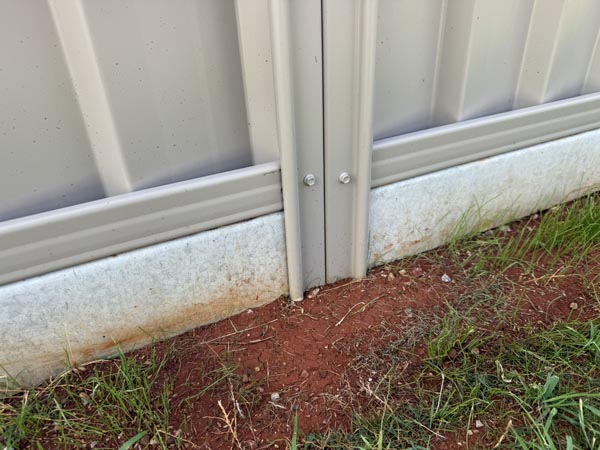
Above: neighbour that drew the short straw to get the plain face instead of the decorative face.
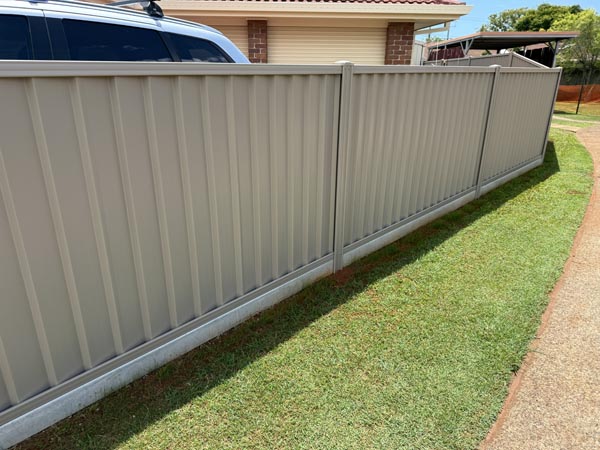
Concrete sleepers cut along their full lengths (instead of digging a channel into the ground) so that the meet the shorter height needed.
When Concrete Sleepers Are the Right Choice
Concrete sleepers belong in retaining walls. These walls are built where there’s a change in ground level and soil must be supported. Engineering input is required and another cost that must be considered. In that context, the concrete’s weight and strength are advantages.
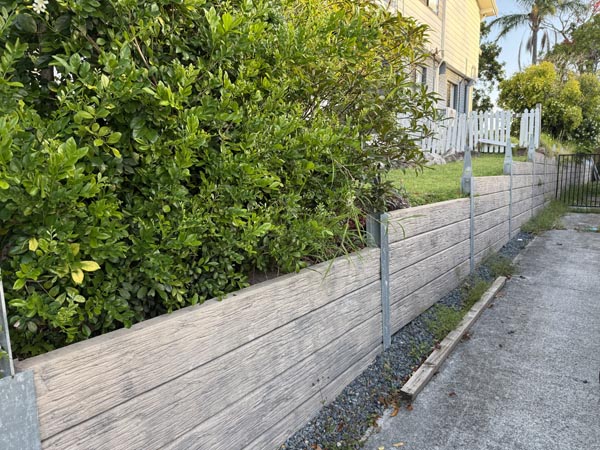
If your site needs both a retaining wall and a fence, the usual sequence is:
- Build the retaining wall with steel H-posts and concrete sleepers.
- Mount the Colorbond or other fence above, often using shark-fin brackets fixed to the H-posts.
This setup separates the structural load (the wall) from the boundary fence and keeps each component working as designed.
Benefits of Timber Sleepers (Treated Pine vs Hardwood)
For most fence installations, a single timber sleeper is the practical option. It’s light, easy to cut, and inexpensive. It closes the gap between the bottom rail and the ground, usually about 50 mm, keeping pets from escaping and debris from building up.
Treated Pine Sleepers
- Chemically treated for decay and insect resistance
- Straight, uniform, easy to handle
- Expected service life: 30–40 years
- Inexpensive and easy to replace
Hardwood Sleepers
- Naturally dense and strong
- More resistant to impact
- Heavier and harder to cut or drill (more labour time)
- Can be slightly warped due to being rough-sawn and not machined
Hardwood costs more and adds weight to installation. Treated pine offers the better balance for typical residential work.
Common Misconceptions About Longevity
A recurring concern is that timber “rots out.” In reality, a properly installed treated pine sleeper takes decades to deteriorate. By the time it needs replacement, the fence itself is often due for renewal.
When a sleeper does eventually age, it can be swapped in minutes without disturbing the posts or panels. Compare that to a concrete sleeper that, once cracked or displaced, requires heavy lifting and often post removal.
Recommended Approach for Most Homeowners
For a standard Colorbond or “Good Neighbour” fence:
- Use one treated pine sleeper if you want the fence to sit tight to the ground.
- Keep the bottom rail 50 mm above ground to avoid moisture retention.
- Avoid concrete sleepers unless you’re building a true retaining wall with H-posts.
This combination gives a long service life, easier installation, and simple future maintenance.